Surface and stability
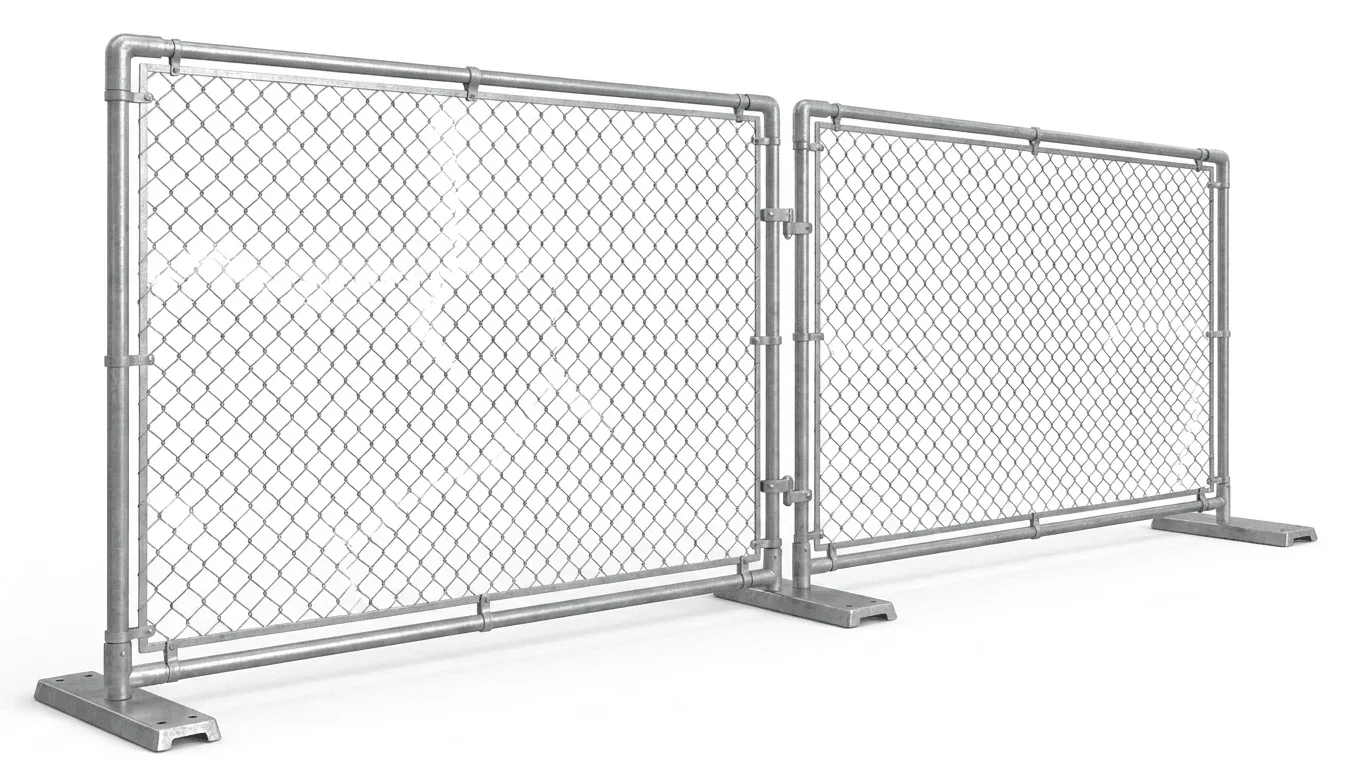
Many coastal lots mix compacted gravel, sand pockets, and pavement. Freestanding panels on uneven ground may need additional stability measures determined by site procedures. Where panels stand near curb drops or drainage cuts, check for tripping points and clearance for swing gates or lift access.
Salt air and hardware longevity
Persistent humidity and salt can attack couplers, bases, and fasteners, especially on multi‑week projects. Hardware checks and corrosion‑resistant components improve reliability when panels are repositioned as phases shift.
Access routes for equipment and people
In Charleston’s active logistics corridors, routes can flip between day and night to match shift work. Leave clear widths for forklifts, aerial lifts, and delivery trucks, and identify any moments when barricades must be rolled or reset to open passages. If lifts will work over a fence line, mast swing and platform positioning may require additional overhead clearance.
- For indoor work near pedestrian flows, see /vertical-mast-lift-rental/ and /electric-scissor-lift-rental/.
- For exterior staging with uneven ground, compare /rough-terrain-scissor-lift-rental/ and /telehandler-rental/.
Event and campus considerations
Renovation work at institutional facilities often shares space with pedestrians and emergency routes. Sightlines, lighting visibility, and egress paths matter as much as panel height. Barricade layouts should reflect posted rules and any after‑hours lighting plans, particularly where coastal fog or mist reduces visibility.